
Trump signals Iran deal, Kushner's resort sparks Albanian protests, Ukraine's two-track Thursday, and Peru heads to a runoff
Trump says a US-Iran peace deal is 'largely negotiated' but major nuclear sticking points remain. Thousands of Albanians protest a Kushner-backed luxury resort threatening protected coastline. Zelensky offers Putin a face-to-face peace meeting — on the same day Russia kills 12 Ukrainians. And Peru votes Sunday in a polarizing election between a left-wing outsider and a conservative dynasty heir.

June 5, 2026 — Four stories dominating the world today: a possible US-Iran peace deal that's closer than it looks but harder than it sounds; thousands of Albanians in the streets over a Trump family-linked resort eating up protected coastline; simultaneous peace signals and artillery fire in Ukraine; and Peru's voters facing a consequential election choice in 48 hours.
Iran: "largely negotiated" — but the hard part is still ahead
The US and Iran are talking seriously about ending the war that started in February. Trump has said publicly that a deal is "largely negotiated" and that he's open to meeting Iran's Supreme Leader Khamenei if it helps get a deal done.1
The immediate goal of the current talks is modest: turn the April 7 ceasefire into something more permanent, and reopen the Strait of Hormuz, which Iran has kept blocked since fighting started.2 The bigger nuclear questions — what Iran does with its enriched uranium, whether it can keep enriching at all — are supposed to come 30–60 days after any ceasefire deal.
That's where things get complicated. Iran has 440 kilograms of near-weapons-grade uranium and isn't willing to ship it out of the country. Tehran's position is that surrendering nuclear material would leave it vulnerable to military pressure later. Trump's original demand was that Iran hand everything over immediately; he's since softened that to allowing Iran to keep the material inside Iran or in a mutually agreed third country, and he's dropped the demand for a permanent end to enrichment — now he'd accept a 20-year pause.1 Iran still says 20 years is too long.
Israel adds another wrinkle. Netanyahu wants any final deal to include the dismantling of Iran's enrichment infrastructure entirely, and nobody knows yet whether he'd accept what's on the table.1
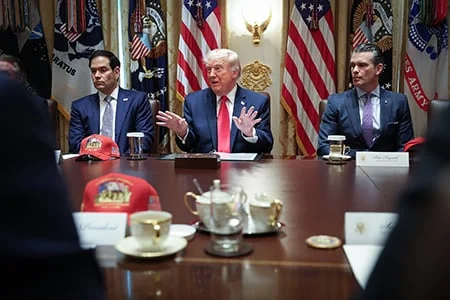
Why it matters: The Strait of Hormuz carries roughly a fifth of the world's oil. Every week the war drags on, global fuel prices stay elevated. A formal ceasefire that reopens the strait would be felt in gas prices within days.
What to watch: The US and Iran were expected to hold a high-level meeting. Whether both sides show up, and whether the strait reopens as part of any early agreement, will tell you whether this deal has real momentum or is still being talked around.
Albania: "Ivanka Trump, go home"
For three days running, thousands of Albanians have taken to the streets of Tirana. The reason: a $1.6 billion luxury resort project backed by Jared Kushner's investment firm, Affinity Partners, is about to be built on one of the Mediterranean's most ecologically sensitive coastlines.3
The project would cover Albania's only island (Sazan), surrounding wetlands, and a marine national park. The waters there are home to the Mediterranean monk seal and over 200 bird species including flamingos and Dalmatian pelicans.3 Earlier this year, Ivanka Trump toured the site with a team of architects — hence the protest banners reading "Ivanka Trump, go home."
Bulldozers and a barbed-wire fence have already gone up, and locals who own or work land nearby say they can no longer access it. Albania's leading conservation group, the PPNEA, says there has been no public consultation, no published permits, and no environmental documentation.

Albania's Prime Minister Edi Rama — who wants Albania in the EU by 2030 and needs foreign investment to get there — is refusing to stop the project. On Tuesday he offered to "discuss solutions" with protesters; they rejected his offer. On Wednesday he made his position clear: "There is absolutely no chance that the investment will stop as long as I am here."3
The EU is watching. Albania's own anti-corruption prosecution body (SPAK) has opened an inquiry into whether the 2024 legislative changes that cleared the way for the project were done legally.
Why it matters: This is a story about what happens when a small country's EU ambitions collide with the Trump family's global business interests. If SPAK's investigation goes anywhere, it could put Albania's EU membership path in real jeopardy.
What to watch: Whether the protests grow to the south, where the bulldozers are actually working, and whether SPAK's inquiry leads to any construction pause.
Ukraine: peace letters and missiles, on the same day
Thursday was a strange day in the Russia-Ukraine war. Both things happened simultaneously: Ukraine's President Zelensky published an open letter to Putin proposing a face-to-face meeting to end the war, while Russian strikes killed 12 people in Ukraine.4
Zelensky's letter told Putin directly that most Russians are tired — tired of drone attacks hitting their cities, tired of inflation and fuel shortages — and that if Putin doesn't find his own way out of this war, "Ukraine will keep fighting for survival," which he suggested could eventually threaten Putin's personal grip on power.5
Meanwhile, at the St. Petersburg International Economic Forum (Russia's annual business gathering), Putin said he would be willing to make "some compromises" to end the war — following, he said, a request from Trump. He also walked back a longstanding position: he'd previously refused to deal with Zelensky on the grounds that his presidential term had expired, but this week he said he could sign a peace deal with "a legitimate representative of Ukraine, perhaps even Zelensky."56
Russia has lost a net 93 square miles of Ukrainian territory over the past month, according to the Institute for the Study of War, but Putin said Russian forces are still advancing and Russia has the resources to keep going.7
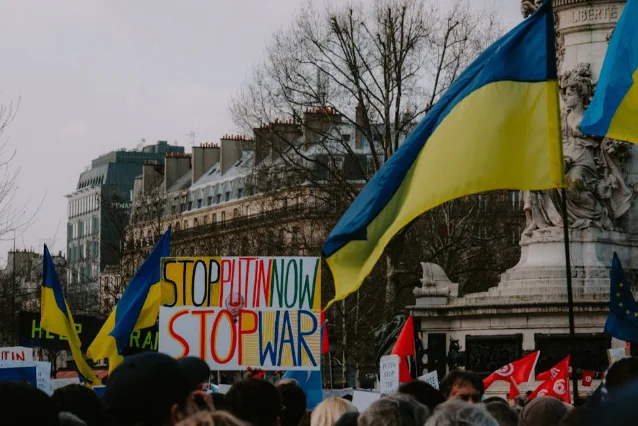
Why it matters: Both sides are under real pressure. Ukraine needs a ceasefire before it runs out of Western support; Russia is dealing with a slowing economy, sanctions, and a war that's burning through its military capacity faster than official statements admit. The simultaneous public outreach — Zelensky's open letter, Putin's compromise talk — suggests both are looking for an exit but neither wants to appear to be asking for one first.
What to watch: Whether Putin responds to Zelensky's letter, and whether Trump acts as an intermediary to set up a direct meeting.
Peru: a divisive election in 48 hours
On Sunday, Peru votes in a presidential runoff that pits conservative Keiko Fujimori against left-wing candidate Roberto Sanchez. Polls show it's close.8
Who they are: Keiko Fujimori is the daughter of former President Alberto Fujimori, who rewrote Peru's constitution in the 1990s. She's the establishment conservative candidate. Roberto Sanchez is a 57-year-old left-wing congressman who served as trade minister under Pedro Castillo — the president who was removed from office in 2022 after trying to dissolve Congress.8 Sanchez has been endorsed by Castillo and has promised to try to get him released from prison.
Why investors are nervous: Sanchez initially ran on rewriting the constitution, renegotiating mining contracts, and taxing windfall profits from extractive industries. Peru's economy has been booming partly on the back of mining revenues. He's since shifted toward more moderate language, hired a market-friendly economic adviser, and promised not to nationalize anything — but the pivot has made some of his original supporters suspicious, and investors aren't entirely convinced.9
Why it matters: Either outcome produces a president facing a hostile or fractured Congress. Peru has had six presidents in the last decade. The deeper question is whether Peru's political institutions can hold together under whoever wins — and whether the country's mining-driven economic gains will survive the political instability that has come with all of them.
What to watch: Sunday's result, and whether the losing side accepts it. Peru's electoral authority has already drawn criticism for taking weeks to announce first-round results. A contested count could turn a tense election into a genuine crisis.9
参考ソース
- 1Trump Says U.S., Iran Close to Deal — Arms Control Association
- 2Iran live updates: Trump details risky, rejected plan — ABC News
- 3Protests in Albania grow over Jared Kushner-backed luxury resort — The Guardian
- 4Russia kills 12 in Ukraine as Kyiv mourns 707 children killed since 2022 — Al Jazeera
- 5Ukraine-Russia war latest: Zelensky offers to meet Putin — The Independent
- 6Putin says Trump ideas could bring peace in Ukraine — SCMP
- 7Russia-Ukraine War Report Card, June 3, 2026 — Russia Matters
- 8Peru's leftist Roberto Sanchez seeks centrist appeal ahead of runoff — Reuters
- 9Will Peru's booming economy survive its latest election? — Chatham House
このコンテンツについて、さらに観点や背景を補足しましょう。